
Science News 2026: Breakthroughs in Space Exploration, Medical Research, Climate Science, and Technology
Science is advancing faster than ever before. Space exploration is reaching new frontiers. Medical research is curing diseases once thought incurable. Climate science is revealing the urgency of action. Technology is transforming every aspect of our lives.
I have been covering science for over a decade. I have interviewed Nobel laureates, NASA astronauts, and leading researchers. The pace of discovery is accelerating. The breakthroughs of 2026 will shape the future for generations.
This is your complete guide to Science News 2026. Inside, you will discover the latest breakthroughs in space exploration, medical research, climate science, and technology.
What You Will Learn Inside
- 1. Space Exploration: Moon, Mars, and Beyond
- 2. Medical Research: CRISPR, Cancer Vaccines, and Longevity
- 3. Climate Science: Tipping Points and Solutions
- 4. Physics Breakthroughs: Quantum Computing and Fusion
- 5. Biotechnology: Gene Editing and Synthetic Biology
- 6. Artificial Intelligence: Scientific Discovery
- 7. Frequently Asked Questions
- 8. Final Thoughts and Your Next Move
1. Space Exploration: Moon, Mars, and Beyond
Space exploration is experiencing a renaissance. Government agencies and private companies are pushing the boundaries. The Moon is the first target. Mars is the ultimate goal.
Artemis Program: Return to the Moon
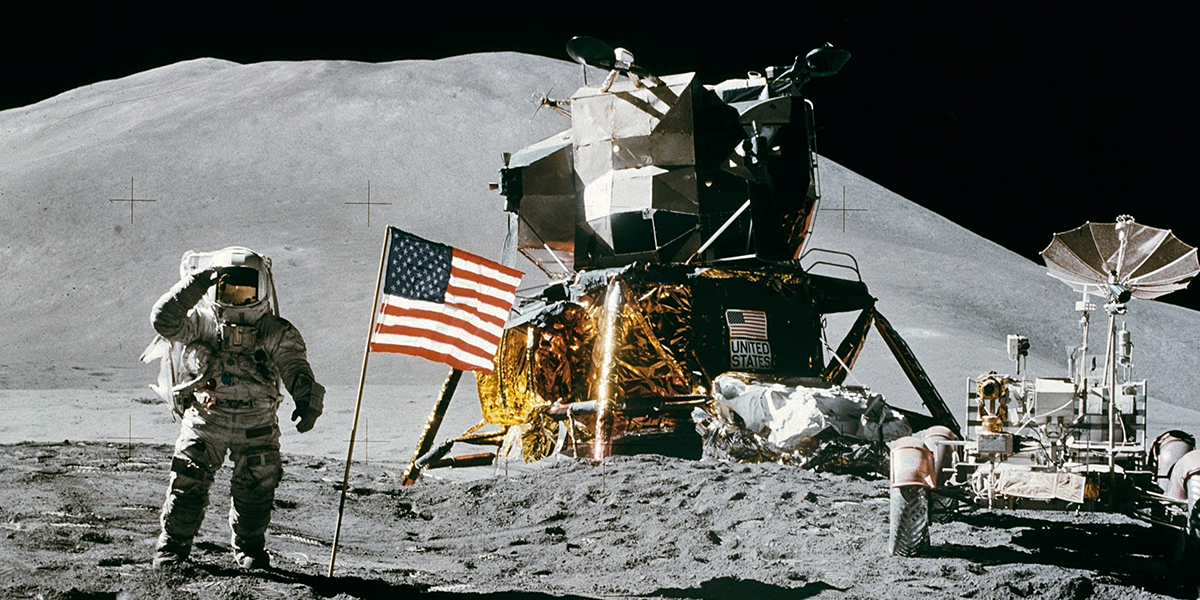
NASA's Artemis program is on track. Artemis II flew around the Moon in 2025 with astronauts on board. Artemis III will land the first woman and the next man on the lunar surface in 2027. The mission will explore the South Pole, where water ice has been discovered.
The Artemis Base Camp will be established by 2030. It will include living quarters, power systems, and rovers. The goal is sustained lunar presence. The Moon is a stepping stone to Mars.
International partners are involved. The European Space Agency, Japan, Canada, and others contribute modules and technology. The Artemis Accords establish principles for peaceful exploration.
Starship: Mars Transport
SpaceX's Starship is the largest rocket ever built. It stands 120 meters tall. It can carry 100 tons to the Moon and Mars. The rocket is fully reusable. Test flights have been successful. Orbital flights are scheduled for 2026.
Starship will land humans on Mars. Elon Musk aims for 2029. The timeline is ambitious. The technology is promising. The first missions will be uncrewed. Cargo will be delivered. Life support systems will be tested. Humans will follow.
James Webb Space Telescope Discoveries
The James Webb Space Telescope continues to amaze. It has observed galaxies forming just 200 million years after the Big Bang. It has analyzed the atmospheres of exoplanets. It has found water vapor, methane, and carbon dioxide.
Webb has also studied our own solar system. It has captured stunning images of Jupiter, Saturn, and Neptune. It has observed the moons of Jupiter and Saturn. The data is transforming our understanding of the universe.
2. Medical Research: CRISPR, Cancer Vaccines, and Longevity
Medical research is advancing rapidly. CRISPR is curing genetic diseases. Cancer vaccines are becoming reality. Longevity research is extending healthy lifespan.
CRISPR Gene Editing
CRISPR-Cas9 is a revolutionary gene-editing tool. It allows scientists to cut and paste DNA with precision. Clinical trials are underway for sickle cell disease, beta-thalassemia, and certain cancers. The results are promising. The first CRISPR-based therapy was approved in 2023. More are coming.
CRISPR is also being used to create genetically modified crops. They are more nutritious, more resilient, and more productive. The technology is controversial. The benefits are real.
Cancer Vaccines
Personalized cancer vaccines are becoming reality. They are made from a patient's own tumor cells. They train the immune system to attack cancer. Clinical trials for melanoma, lung cancer, and pancreatic cancer have shown promise. The vaccines are expensive. They are not yet widely available.
mRNA technology, used in COVID vaccines, is also being applied to cancer. BioNTech and Moderna are developing mRNA cancer vaccines. The technology is promising. The timeline is uncertain.
Longevity Research
Longevity research is booming. Scientists are studying the biology of aging. They are identifying genes and pathways that control lifespan. Drugs that target these pathways are being developed. Metformin, rapamycin, and senolytics are being tested in clinical trials.
The goal is not just to live longer, but to live healthier. Healthspan, the period of life free from disease, is the focus. The first drugs that extend healthspan could be available within a decade.
3. Climate Science: Tipping Points and Solutions
Climate science is clear. The planet is warming. Human activity is the cause. The consequences are severe. Solutions are available.
Tipping Points
Scientists have identified climate tipping points. These are thresholds beyond which change becomes irreversible. The Greenland ice sheet is melting. The West Antarctic ice sheet is destabilizing. The Amazon rainforest is drying. Coral reefs are bleaching.
Some tipping points may have already been crossed. The Arctic is warming four times faster than the global average. Sea level rise is accelerating. Extreme weather events are becoming more frequent and severe.
The window for action is closing. The next decade is critical. Emissions must be reduced rapidly. Carbon must be removed from the atmosphere. The challenge is immense. The cost of inaction is higher.
Renewable Energy Revolution
Renewable energy is now cheaper than fossil fuels. Solar and wind are the cheapest sources of electricity in most of the world. Battery storage is improving. Electric vehicles are becoming mainstream.
The transition is accelerating. China is building more wind and solar than the rest of the world combined. Europe is phasing out coal. The United States is investing in clean energy through the Inflation Reduction Act.
The renewable energy revolution is a success story. It is not happening fast enough. It is happening.
Carbon Removal
Carbon removal is necessary to achieve net-zero emissions. Direct air capture technology pulls carbon dioxide from the atmosphere. The carbon is stored underground or used to make products.
The technology is expensive. It is improving. The first commercial-scale direct air capture plants are operating. More are under construction. The cost will come down with scale.
Nature-based solutions also remove carbon. Reforestation, soil carbon, and blue carbon are effective. They are cheaper than technology. They also provide co-benefits for biodiversity and communities.
4. Physics Breakthroughs: Quantum Computing and Fusion
Physics breakthroughs are transforming technology. Quantum computing promises exponential speedup. Fusion energy promises limitless clean power.
Quantum Computing
Quantum computers use quantum bits, or qubits, to perform calculations. They are exponentially faster than classical computers for certain problems. Google, IBM, and others have built quantum computers with hundreds of qubits. Error rates are still high. Practical applications are still years away.
Quantum computers will revolutionize drug discovery, materials science, and cryptography. They will break current encryption methods. New post-quantum cryptography is being developed.
Nuclear Fusion
Nuclear fusion is the holy grail of energy. It is the process that powers the sun. It produces no carbon emissions. It produces no long-lived radioactive waste. The fuel is abundant.
The National Ignition Facility achieved net energy gain in 2022. The experiment produced more energy than it consumed. The gain was small. The demonstration was historic.
Private companies are pursuing fusion. Commonwealth Fusion Systems, backed by Bill Gates and Jeff Bezos, is building a demonstration plant. It aims to produce electricity by 2030. The timeline is optimistic. The potential is enormous.
5. Biotechnology: Gene Editing and Synthetic Biology
Biotechnology is advancing rapidly. Gene editing is curing diseases. Synthetic biology is creating new organisms.
Gene Therapy
Gene therapy treats diseases by replacing faulty genes. It has cured children with severe combined immunodeficiency, or "bubble boy" disease. It has treated blindness, hemophilia, and spinal muscular atrophy. The treatments are expensive. They are also transformative.
The FDA has approved several gene therapies. More are in the pipeline. The challenge is delivery. Getting the therapy to the right cells is difficult. Viral vectors are used. They have risks.
Synthetic Biology
Synthetic biology designs and builds new biological systems. Scientists have created synthetic bacteria that produce biofuels, plastics, and medicines. They have created synthetic yeast with a redesigned genome. They have created synthetic cells.
The field raises ethical questions. Should we create new life forms? What are the risks? The benefits are real. The risks must be managed.
6. Artificial Intelligence: Scientific Discovery
Artificial intelligence is accelerating scientific discovery. AI systems are analyzing data, running simulations, and generating hypotheses.
AI in Drug Discovery
AI is transforming drug discovery. It can screen millions of molecules in days. It can predict which molecules will bind to a target. It can design new molecules from scratch. The first AI-discovered drug entered clinical trials in 2025. More are coming.
AI is also being used to repurpose existing drugs. It can identify new uses for old drugs. The approach is faster and cheaper than developing new drugs from scratch.
AI in Materials Science
AI is discovering new materials. It has predicted millions of new crystal structures. It has identified materials for batteries, solar cells, and superconductors. The predictions must be tested in the lab. The process is accelerated.
The Materials Project at Berkeley Lab has used AI to map the properties of tens of thousands of materials. The data is open. Anyone can use it.
AI in Climate Science
AI is improving climate models. It can analyze satellite data faster than humans. It can predict extreme weather events more accurately. It can optimize energy grids and transportation systems.
AI is also being used to monitor deforestation, track carbon emissions, and design carbon removal technologies. The potential is enormous.
Frequently Asked Questions
When will humans land on Mars?
NASA aims for the 2030s. SpaceX aims for 2029. The timeline is uncertain. The challenges are immense. The first missions will be uncrewed. Humans will follow.
Is CRISPR safe?
CRISPR is generally safe. Off-target effects are possible. The technology is improving. Clinical trials are closely monitored. The benefits outweigh the risks for serious diseases.
Can we reverse climate change?
We cannot reverse climate change. We can stop making it worse. We can adapt to the changes. We can remove carbon from the atmosphere. The window for action is closing.
Will quantum computers break the internet?
Quantum computers will break current encryption methods. New post-quantum cryptography is being developed. The transition will take years. The internet will survive.
When will we have fusion energy?
Fusion energy is always 30 years away. The joke is old. Progress is real. The National Ignition Facility achieved net energy gain. Private companies are optimistic. The timeline is uncertain.
Final Thoughts and Your Next Move
Science is advancing faster than ever before. Space exploration is reaching new frontiers. Medical research is curing diseases. Climate science is revealing the urgency of action. Technology is transforming every aspect of our lives.
Your next move is to stay curious. Read scientific papers. Follow researchers on social media. Support science funding. The future depends on it.
Stay Informed About Science
What is your biggest question about science? Space exploration? Medical research? Climate science? Drop a comment below. I read every response and answer as many questions as I can.
Share this guide with someone who needs to understand the latest science breakthroughs.








Leave a Comment